
Best Price Intelligence Services for Brands & Retailers in 2026


Price intelligence services help brands and retailers track competitor pricing, monitor market movements, and make data-backed pricing decisions. But "price intelligence" is no longer a single category. The market now splits into two distinct approaches: SaaS pricing platforms that give your team a dashboard and tools to manage competitive data, and fully managed data collection services where a provider builds and maintains custom data pipelines on your behalf.
At Ficstar, competitor pricing data represents over 80% of our active projects. We process more than one billion product prices monthly for 200+ enterprise clients, so we see firsthand which approach works for which situation. This guide evaluates both. We review the leading SaaS platforms honestly, explain how managed collection differs, and give you a framework for matching your situation to the right service. Rather than ranking providers 1 through 10, we group them by what they do well and who they fit.
What to Look for in a Price Intelligence Service
Before comparing specific providers, it helps to know which evaluation criteria actually matter when you're making a procurement decision. These are the factors that separate a useful price intelligence service from one that creates more work than it solves.
Product Matching Quality
This is the single most important capability to evaluate, and the one most often reduced to a marketing percentage.

Product matching means correctly pairing your SKUs with equivalent competitor products, even when competitors use different names, descriptions, or identifiers. Several vendors now advertise matching accuracy around 99%, but these numbers are not measured the same way. Intelligence Node, for example, contractually defines 99% exact-match accuracy as no more than one false positive among 100 matched SKUs, and separately addresses "matching discovery" (false negatives among items that weren't matched). DataWeave distinguishes between exact, similar, and private-label matching, and uses human-assisted verification. Price2Spy offers manual, hybrid, and automated matching depending on the product category.
These distinctions matter. A platform can have excellent precision on the products it does match while still failing to discover a substantial part of your catalog.
What to ask during evaluation:
How does the vendor define its matching accuracy number? Does it cover precision (false positives), recall (false negatives), or both?
Does the platform distinguish between exact matches, similar products, and private-label equivalents?
What happens with products that can't be matched automatically? Is there a human review process, or are they simply dropped?
A strong test: give shortlisted providers the same blinded product sample from several difficult categories (not just items with GTIN/EAN identifiers) and manually establish ground truth before comparing results.
Refresh Frequency

How often a service collects new pricing data varies enormously. Prisync's standard plans refresh URLs up to three times daily. Price2Spy Premium offers up to eight checks per day. Omnia Retail allows scheduling down to the minute. Intelligence Node sells frequencies from weekly through daily and up to claimed ten-second refreshes.
The practical question is not "how fast can a vendor technically observe a change?" It's "how quickly can your organization act on that change?" If your pricing team reviews competitive data weekly, paying for near-real-time collection adds cost without creating value.
For electronics, marketplaces, travel, and Buy Box competition, intraday monitoring can be commercially valuable. For slower-moving branded catalogs, daily collection is often adequate. According to The Wall Street Journal, Norway's REMA 1000 grocery chain can alter electronic shelf prices up to 100 times per day, but the same reporting noted the competitive danger of rapid changes becoming a "race to the bottom."
Source Coverage and Collection Resilience
Any provider can collect data from cooperating websites. The real test is what happens with difficult sources: sites that use sophisticated anti-bot measures, dynamic JavaScript rendering, geographic restrictions, or frequent structural changes.
Price2Spy explicitly sells usage-based "Stealth IP traffic" for bot-aware sites and tells customers that the required amount differs by client. Minderest states that its own collection technology handles dynamic rendering, anti-bot detection, and data-format changes. These disclosures are useful because they demonstrate that source protection is not an edge case. It doesn't disappear simply because you buy a platform.
During evaluation, ask for actual results from the hardest target domains rather than accepting a generic list of supported sites.
Integration and Data Delivery
Integration requirements go beyond "does it have an API?" A mature evaluation should cover:
Inbound data: How does the platform ingest your product feed? Does it map to your PIM or ERP?
Outbound data: Can you receive data via API, bulk files, or direct BI integration?
Historical data: Are snapshots retained? Can you query pricing history?
Error handling: How do corrections propagate downstream? What retry behavior exists?
Competera describes integrating and preprocessing the retailer's internal data before training dedicated ML models, and says it connects with ERP, PIM, BI, and existing pricing workflows. Intelligence Node supports API, SaaS portal, and file-transfer consumption. Prisync supports Shopify, Amazon, Google Shopping, and Magento integrations, though API access adds 20% to applicable subscriptions.
Operational Overhead After Purchase
Buyers often underestimate the ongoing work that remains after purchasing a SaaS platform. The workload typically goes beyond "running the crawler." It includes product-feed maintenance, matching exceptions, source-change handling, QA review, business-rule governance, and deciding what to do when a result looks questionable.
Competera's own implementation description includes internal-data connection and preprocessing, model validation and training, and ongoing performance refinement. Omnia Retail includes a dedicated customer-success team in enterprise plans and provides rollback, version control, audit logs, and approval safeguards. DataWeave advertises a human-in-the-loop verification system, which itself illustrates that reliable matching is not a fully automated, one-time problem.
Understanding this operational overhead upfront matters because it determines the true total cost of ownership, not just the subscription price.
SaaS Pricing Intelligence Platforms
The platforms below represent the most established SaaS options for competitive pricing intelligence. We've grouped them by their strongest fit rather than forcing a 1-through-8 ranking, because a platform that works well for one team's needs can be a poor fit for another's.
Mid-Market and Accessible Starting Points
Prisync is the most transparent entry point in the market. Its current URL-based pricing starts at $99/month for up to 100 products, $199 for up to 1,000, and $399 for up to 5,000. The platform includes dynamic pricing, MAP monitoring, variants, and marketplace monitoring. URL-based prices refresh up to three times daily, while channel-based data updates daily. API access adds 20% on applicable plans.
Prisync also offers a 14-day trial and free onboarding. The main limitation: once requirements exceed 5,000 products or standard channel coverage, pricing moves to a custom discussion. For teams with conventional e-commerce catalogs and a budget to respect, it's a solid starting point.
Price2Spy organizes its offering into Starter, Basic, and Premium tiers but no longer publishes dollar prices on its pricing page. Starter supports up to ten competitors with self-service monitoring. Basic adds support, marketplace monitoring, historical reports, e-commerce integration, and MAP monitoring. Premium includes API access, additional extracted fields, and up to eight checks per day.
Price2Spy's modular approach is worth noting: product matching can be manual, hybrid, or automated. Repricing, screenshots, GA4 integration, and account management are available as add-ons. For teams that want straightforward competitor monitoring with the ability to layer on services selectively, it's a flexible option.
Dynamic Pricing and Automation
Omnia Retail combines price monitoring with dynamic pricing and emphasizes "agentic" AI. SMB plans start at €399/month, while enterprise plans support multi-shop setups, unlimited users, pricing consultants, and dedicated customer success.
What sets Omnia apart is its governance. Schedules can run down to the minute, teams can set approval thresholds and safety rules, a visual pricing tree exposes the strategy logic, and versioning supports test and rollback. A "Show Me Why" capability exposes the basis of a price calculation. For retailers who specifically want automated repricing with transparent controls, Omnia's emphasis on auditability is notable.
Enterprise Optimization and Large-Scale Data
Competera is explicitly built for enterprise retailers. Its platform spans competitive data collection and matching, price intelligence, dynamic and omnichannel pricing, analytics, promotions, and markdown optimization. Rather than simple "follow the competitor" rules, Competera incorporates internal retailer data and demand modeling into price recommendations and scenario analysis.
The implementation footprint matches the ambition: onboarding involves connecting and preparing internal retail data, enriching it with external signals, validating dedicated ML models against history, and continuously refining performance. Competera publishes case-study figures including 95%+ matching accuracy and 99% data quality across 180,000 items and 150+ competitors. Those are vendor-reported numbers, not independent benchmarks, but they indicate the scale the platform is designed for.
Intelligence Node is positioned around real-time competitive pricing, assortment, MAP, and digital-shelf intelligence for enterprise brands and retailers. It advertises a repository exceeding one billion products and a 99% matching-accuracy guarantee with exact, similar, variation, and private-label matching.
Its pricing documentation is more informative than most enterprise vendors. The minimum project size starts at $5,000/month with a one-year minimum term. Price varies by SKU count, competitor websites, modules, and refresh frequency. Customers can choose frequencies from weekly through daily and up to ten seconds. Data delivery options include API, SaaS portal, and file transfer.
A recent development worth noting: Interpublic Group acquired Intelligence Node in December 2024, as reported by The Wall Street Journal. Omnicom then completed its acquisition of Interpublic in November 2025. Intelligence Node now identifies itself as "an Omnicom Company," meaning the product sits inside a much larger advertising, data, and commerce-services group.
Omnichannel Monitoring
Minderest presents two platforms: Minderest for monitoring prices and product ranges, and Reactev for AI price optimization and dynamic pricing. The company monitors retailers, marketplaces, and comparison-shopping sites across countries, currencies, and languages with daily price and stock updates.
What genuinely differentiates Minderest is InStore, a physical price-checking capability that centralizes physical and online channel information. For retailers managing pricing across both e-commerce and brick-and-mortar, this is a capability most purely digital platforms lack. Minderest advertises 99%+ data accuracy and says its collection system handles dynamic rendering, anti-bot detection, and changing data formats across 180+ markets. Pricing is not publicly available.
Digital Shelf and Commerce Intelligence
Profitero+ is better understood as commerce intelligence than a narrow price tracker. Its current proposition covers daily product and competitor intelligence, Amazon 1P/3P sales estimates, digital shelf analytics, content optimization, retail-media activation, and Amazon operations automation. The vendor reports coverage across 1,400+ retailers daily and 70+ countries.
A global consumer brand that needs to understand price alongside availability, search visibility, content, ratings, media, and Amazon performance has a different problem than a retailer that simply wants competitor prices. That breadth is Profitero+'s strength. For a team that specifically needs a competitive-pricing point solution, it may be more platform than necessary. Profitero joined Publicis Groupe in 2022.
DataWeave combines competitive price intelligence, assortment analytics, and digital-shelf analytics. Its matching includes exact, similar, and private-label products, while its Veracite capability introduces human-assisted verification. DataWeave advertises 99%+ matching accuracy, exposes data recency and quality information, lets users view cached source URLs and flag inaccurate records, and describes a continuous human-feedback loop around its AI.
These QA features are significant because they address precisely the data-quality concerns that often come up when teams compare software platforms to managed data services. DataWeave blurs that line, though the 99%+ number remains a vendor guarantee rather than an independently verified benchmark.
Ficstar: A Fully Managed Data Collection Service
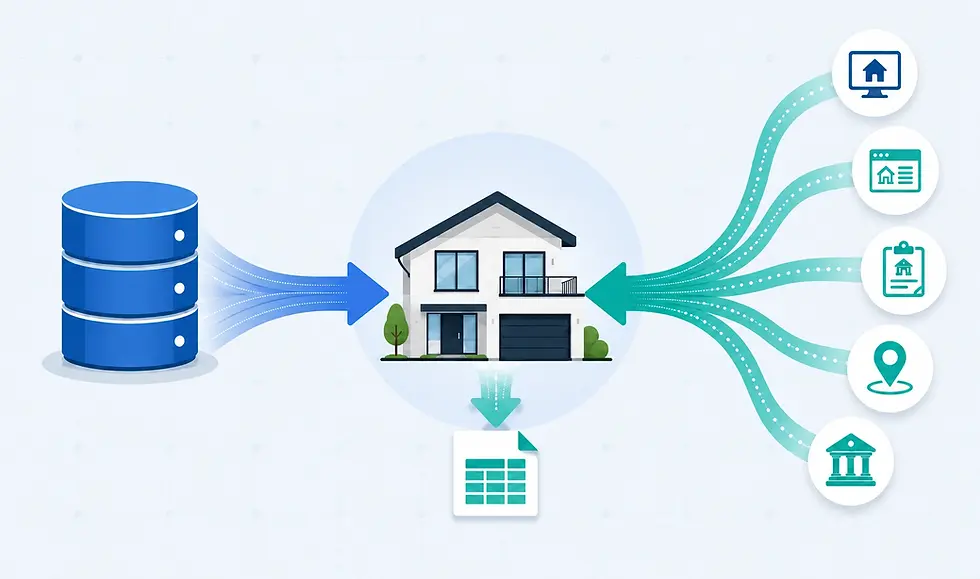
Every provider above is a software platform you operate: you configure it, feed it your catalog, and run your pricing program inside the vendor's product. Ficstar is deliberately not that, which is why it belongs at the end of this list rather than inside it. Ficstar is a fully managed data collection service. Since 2005, its own team has built, run, and maintained the entire competitor-pricing pipeline for enterprise clients, who simply receive verified, ready-to-use data. It processes more than one billion product prices a month, so the distinction here is one of model, not scale.
The practical difference is who does the work. With a platform, your team owns source setup, product matching, blocked-site workarounds, quality assurance, and delivery into your systems. With Ficstar's fully managed data collection, that operational load sits with Ficstar: automated product matching across your SKUs and competitor equivalents, 50+ quality checks on every dataset before it ships, crawlers updated proactively when competitor sites change their structure, and delivery in whatever format your systems require. Where a platform hands you a tool and a standard dataset, Ficstar collects the exact data you specify from the exact sources you name, which is the right fit when your requirements fall outside what a packaged product covers.
Platform Comparison at a Glance
Platform | Strongest Fit | Pricing Model | Key Differentiator | Main Qualification |
Prisync | Mid-market catalogs, budget-conscious teams | $99 to $399/month (public tiers) | Transparent pricing, easy onboarding | Standard cadence. Custom discussion above 5,000 products |
Price2Spy | Straightforward monitoring with modular add-ons | Quote-based tiers | Manual/hybrid/automated matching options | Support, API, and protected-site traffic in higher tiers |
Omnia Retail | Retailers wanting monitoring plus automated repricing | From €399/month (SMB). Enterprise custom | Minute-level scheduling, pricing governance, audit trail | More automation-oriented than teams wanting raw data feeds |
Competera | Large retailers wanting demand-based price optimization | Enterprise custom quote | Demand modeling, scenarios, human oversight | Substantial implementation footprint |
Intelligence Node | Enterprise brands, MAP compliance, large-scale matching | $5,000/month minimum, annual term | Contractual exact-match SLA. Configurable high-frequency collection | Material minimum commitment. Now an Omnicom company |
Minderest | Omnichannel monitoring including physical stores | Sales/demo-led, no public pricing | InStore physical price checking. 180+ markets | Core monitoring and AI optimization are separate platforms |
Profitero+ | Global brands needing pricing in a broader digital-shelf context | Enterprise sales-led | Daily data across 1,400+ retailers. Amazon intelligence | Not primarily a competitive-price point solution |
DataWeave | Enterprise competitive intelligence with sophisticated matching | Demo/sales-led | Human-assisted verification. Exact/similar/private-label matching | Vendor guarantee, not independently benchmarked |
Ficstar (managed service, not a platform) | Teams whose data needs fall outside a standard platform: custom sources, fields, matching, schema, or delivery | Custom, scoped per project; free trial on your own data | Fully managed, end-to-end collection. Ficstar's team builds, runs, and QAs the pipeline, so you receive verified, ready-to-use data rather than operate software | A different category, not a like-for-like SaaS tool. Not self-service; involves upfront discovery and configuration |
Industry Consolidation
One pattern worth tracking: competitive intelligence and retail data are increasingly valuable to larger marketing and data groups. Intelligence Node's path through IPG to Omnicom, and Profitero's position inside Publicis Groupe, reflect this trend. It doesn't mean these products will get worse, but enterprise buyers should understand who owns the platform they're evaluating and how that affects product roadmap, support, and pricing over a multi-year contract.
When a Platform Isn't the Right Fit: Managed Price Intelligence

Every platform reviewed above can handle substantial enterprise complexity. Competera integrates internal data and trains retailer-specific models. Intelligence Node begins at a $5,000/month enterprise commitment with custom data delivery. DataWeave combines AI matching with human verification. The argument for managed data collection is not that platforms are incapable.
The distinction is operational ownership.
A SaaS platform sells a productized pricing intelligence environment. Your team adopts the vendor's product, its workflows, and its commercial model. A managed collection service sells responsibility for producing an agreed dataset. The client defines the required output. The service provider owns implementation, extraction, QA, change management, and delivery end to end.
That distinction gets more important as requirements move away from repeatable software workflows:
Unusual or niche sources that aren't in a platform's standard coverage
Heavily protected sites where standard collection tools get blocked (Price2Spy's separately charged "Stealth IP traffic" illustrates why these requirements can start escaping a standard subscription)
Specialized data fields beyond standard price and availability
Non-standard matching logic or difficult private-label and equivalent-product matching
Custom QA rules and delivery schemas tailored to internal systems
Teams that explicitly do not want to own extraction operations, preferring to receive verified data in their preferred format without managing the infrastructure behind it
How Managed Price Intelligence Works at Ficstar
We've spent 20+ years building competitor price monitoring infrastructure for enterprise teams that need exactly this kind of custom data operation. Rather than giving clients a dashboard and asking them to manage their own data, we build the entire pipeline: identifying sources, configuring collection, matching products, running QA, and delivering structured data on schedule.
A few specifics on what this looks like in practice:
Automated product matching pairs your SKUs with competitor equivalents across thousands of items, even when identifiers, naming conventions, and descriptions differ across sites
50+ quality checks per dataset before delivery, combining automated validation, anomaly detection, and human review
Proactive source monitoring means our team updates crawlers when competitor websites change their structure, before those changes impact your data. There's no gap in coverage and no need for your team to notice or respond to site changes
Custom delivery in whatever format your systems require: API feeds, flat files, direct integration with BI tools, or structured exports matched to your internal schemas
As Jorge Diaz, Pricing Manager at Advance Auto Parts, put it: "Ficstar has offered us a great solution for our competitor price data needs. Now we can catch up all the price changes from our competitors no matter how they make the changes."
Managed collection involves more upfront discovery and configuration than opening a self-service account. It's built for teams whose requirements have moved beyond what a standard platform offers, or who have decided they'd rather receive verified data than operate extraction infrastructure themselves. For a small catalog with straightforward competitors, a self-service platform is likely the right starting point. For complex enterprise requirements, where data accuracy directly affects pricing decisions worth millions, the fully managed approach is where we work.
AI-Powered Pricing: What the Evidence Shows

AI is now part of nearly every vendor's pitch, but the evidence for what it actually does in production is more specific than most marketing suggests.
On the credible side: a June 2026 paper published on arXiv describes two AI pricing systems deployed at scale at PepsiCo. PricingAI estimates own-price and cross-price elasticities using Bayesian hierarchical modeling before feeding recommendations into nonlinear optimization subject to operational and business constraints. PromoAI couples ML forecasts with mixed-integer optimization across millions of product/promotion/timing possibilities. This is strong evidence that ML-driven pricing works at enterprise scale when paired with appropriate constraints, validation, and human oversight.
On the cautionary side: Instacart discontinued its Eversight-powered item-price testing program in December 2025 after consumer backlash. According to the Associated Press, a study involving more than 400 shoppers found that nearly three out of four tested grocery products appeared at multiple prices to customers shopping the same store. Instacart said customers would thereafter see the same price for the same item at the same store.
The lesson is not that AI pricing doesn't work. It's that optimization objectives need consumer trust, brand perception, and regulatory constraints alongside margin targets. The FTC's January 2025 surveillance-pricing study found that detailed personal signals including location, browsing activity, and abandoned-cart behavior could be used by pricing intermediaries to personalize prices. In August 2026, the Associated Press reported that the FTC proposed a policy under which companies secretly varying prices based on personal consumer data could face enforcement.
When evaluating any provider's AI capabilities, the questions that matter are: Does the system use only product, market, cost, inventory, and demand data, or also consumer-level information? Is there an audit trail? Can you see why a specific price was recommended? Do you maintain override and approval controls?
How to Choose the Right Approach
The right price intelligence service depends on your situation, not on which vendor has the most polished pitch. Here's a practical framework:
Your Situation | Approach Worth Considering |
100 to 5,000 standard products, straightforward e-commerce competitors, budget-sensitive | Self-service platform like Prisync |
Basic monitoring but expect some custom matching, extraction, or protected sites | Price2Spy, where services and add-ons can be layered onto the platform |
Large retailer with rich transactional data wanting demand-based optimal-price recommendations | Competera |
Large brand prioritizing MAP compliance, exact/similar matching, and contractual data SLAs | Intelligence Node |
Omnichannel competitor monitoring including physical stores | Minderest |
Pricing team wanting automated repricing with transparent rules and approval safeguards | Omnia Retail |
Global brand where pricing is one part of digital shelf, Amazon intelligence, and media execution | Profitero+ |
Enterprise team valuing human-assisted QA plus pricing, assortment, and digital-shelf analytics | DataWeave |
Required dataset doesn't fit a standard platform's sources, matching, schema, or delivery model | Fully managed collection service like Ficstar |
Run a Proof-of-Data Test

Regardless of which approach you're evaluating, one exercise is worth doing before you commit: a proof-of-data test rather than a conventional software demo.
Give every shortlisted provider the same SKU subset and several genuinely difficult target sites. Measure match precision, missed matches, field completeness, timestamp freshness, and delivery success. For similar-product and private-label comparisons, manually label a ground-truth subset. This avoids choosing a provider based on a polished demo while never testing the actual data problem.
Choosing Based on the Data Problem
The pricing intelligence market in 2026 is more capable and more varied than it was even two years ago. SaaS platforms now offer enterprise-scale matching, AI optimization, and sophisticated governance. Managed services handle the data operations that fall outside what any standard product covers. Both categories are legitimate, and the right choice comes down to what your team actually needs, what it's equipped to manage internally, and where the harder data problems sit.
If your pricing intelligence needs are straightforward enough for a platform to handle, a platform is probably the right call. If your requirements involve unusual sources, difficult matching, heavily protected sites, or the need for someone else to own the entire data operation, that's where we work.
We offer a free trial based on collecting actual data from your specified sources, not a product demo. It's the fastest way to test whether managed collection solves the problem your team is working on. Start Your Free Trial


Comments