
Best Real Estate Data Providers in 2026
- Raquell Silva
- Aug 20
- 8 min read

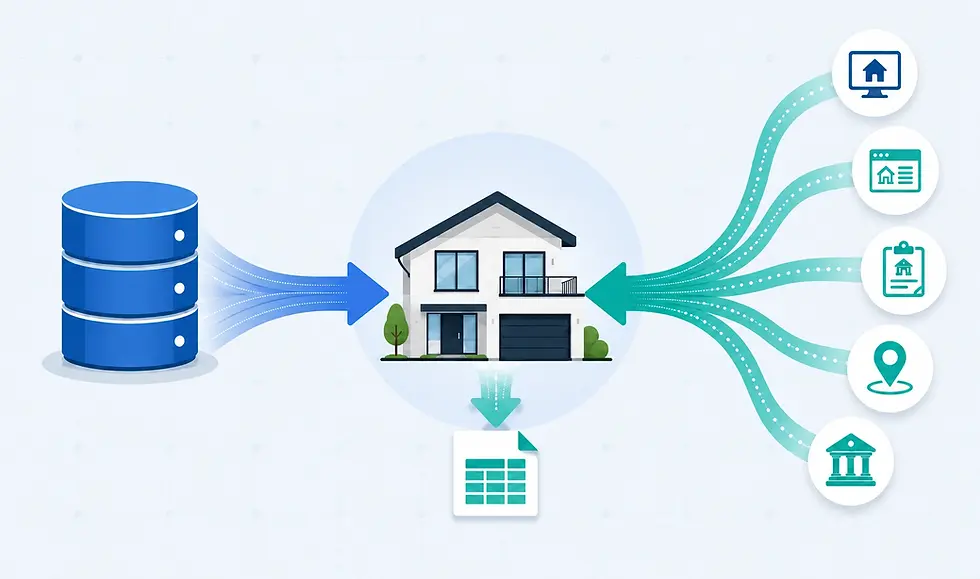
The best real estate data provider depends on what you're trying to do with the data. A mortgage lender underwriting loans needs different records than a commercial broker pulling lease comps, and both need something different from a PropTech startup feeding a valuation model. Most teams compare providers like CoStar, ATTOM, and Zillow, companies that own proprietary datasets and sell access to them. But there's a second path that often gets overlooked: collecting the exact data you need directly from sources like MLS platforms, listing sites, and public records.
As a web scraping and data collection company, we help enterprise teams at Ficstar take that second path when no off-the-shelf dataset fits. This guide compares the leading data providers in 2026 and explains when buying a dataset makes sense and when collecting your own is the better move.
Two Ways to Get Real Estate Data
Before comparing names, it helps to understand the two fundamentally different ways companies source real estate data.
The first is buying from a data provider. Companies like CoStar, ATTOM, and CoreLogic build and maintain their own proprietary databases, then license access through subscriptions, APIs, or bulk files. You get a polished, ready-made dataset, but you're limited to the fields, sources, and update schedules that provider offers.
The second is collecting the data yourself from public sources. Real estate information lives across thousands of websites: MLS systems, national listing portals, county records, and local sites. A web scraping and data collection company gathers exactly the data you specify from those sources and delivers it in your format. You're not buying a fixed product; you're commissioning a custom feed built to your requirements.
Neither approach is universally better. The right choice depends on whether a packaged dataset covers your needs or whether you need something more specific. The sections below cover both.
Comparison of the Best Real Estate Data Providers in 2026
The providers below own and license proprietary real estate datasets. The table summarizes each by focus, coverage, delivery model, and typical users.
Provider | Focus | Coverage and Scope | Delivery | Typical Users |
CoreLogic / Cotality | Residential and commercial | Half-century U.S. property database; tax, mortgage, hazard risk, and valuation models | Cloud platform, APIs, batch feeds | Mortgage lenders, insurers, agencies |
ATTOM Data Solutions | Residential and commercial | 158M+ U.S. parcels; deeds, mortgages, foreclosures, valuations, hazard risk | Bulk files, APIs, cloud | Enterprise developers, PropTech, government |
Zillow Group | Residential | 100M+ U.S. homes; Zestimate home-value and rental indices | Public API, downloads | Agents, homebuyers, DIY investors |
CoStar Group | Commercial | Global office, retail, industrial, multifamily, and land; lease and sale comps | SaaS portal | Commercial brokers, institutional investors |
Dwellsy IQ | Residential rentals | 17M+ single-family and multifamily rental units since 2020 | API, cloud | SFR/BTR investors, rent analysts |
Reonomy | Commercial | 54M+ U.S. properties and 30M+ owner entities | Web app, APIs | CRE deal sourcing, ownership research |
PropertyShark | Residential and urban | Deep local records (ownership, tax, liens, permits); strong in NYC and major metros | Web reports, CSV export | Agents, investors, attorneys |
LoopNet / Crexi | Commercial listings | Millions of active for-sale and for-lease listings across asset classes | Web marketplace | CRE brokers marketing or sourcing deals |
Ficstar | Custom web data collection | Built per project; millions of records from any public source you specify | Custom feeds and APIs in your preferred format | Teams needing proprietary listing, pricing, and property datasets no product offers |

The Best Commercial Real Estate Data Providers
Commercial real estate runs on comparables, ownership records, and market analytics. The leading providers here are built around depth rather than breadth.
CoStar is widely regarded as the dominant source of commercial real estate data, with a global database covering office, retail, industrial, multifamily, and land properties across the U.S., U.K., and Canada. It includes lease and sale comps, vacancy and rent data, and tenant profiles, delivered through a subscription portal. CoStar is the standard for commercial brokers and institutional investors, though it comes at a premium price.
Reonomy takes a different angle, focusing on ownership and portfolio intelligence. Its platform covers more than 54 million U.S. properties and 30 million owner entities, which makes it valuable for off-market lead generation and prospecting. For brokers and investors who need to know who owns what, Reonomy is built for that question.
LoopNet and Crexi serve the listings side of commercial real estate. Both operate large marketplaces with millions of active for-sale and for-lease listings across asset classes. They're search and marketing tools more than analytics platforms, useful for sourcing on-market deals rather than deep ownership research. LoopNet is owned by CoStar.
The Best Residential Real Estate Data Providers
Residential data ranges from free consumer listings to verified parcel records, and the right choice depends on how much accuracy your decisions require.
Zillow is the most recognized name in consumer real estate data. It tracks home value and rental indices across more than 100 million U.S. homes and publishes the widely cited Zestimate. The data is free to access through public APIs and downloads, which makes it a common starting point for agents and individual investors. Consumer estimates are useful for quick comps and trend monitoring but aren't built for institutional underwriting, where verified records matter more.
PropertyShark fills the gap when you need verified records rather than estimates. It offers deep local property data including ownership, tax and assessor records, deed history, liens, and permits, with especially strong coverage in New York City and major metros. One 2026 industry review noted that PropertyShark continues to strike a strong balance between affordability, data freshness, and actionable insight, which explains its broad appeal among agents, investors, and attorneys who need detailed parcel data at a reasonable cost.
Dwellsy IQ specializes in the rental market. Its platform pulls unit-level rental listings from more than 30 property-management systems and covers over 17 million single-family and multifamily units since 2020. For investors and lenders focused on rent growth and single-family rental underwriting, that specialization is the draw.
The Best Real Estate Data Providers for Lenders and Institutions
Banks, insurers, and large enterprises need comprehensive, validated data with risk analytics built in. Two providers dominate this category.
CoreLogic, now operating as Cotality, maintains one of the largest property data repositories in the U.S., built over roughly half a century. Its records include tax and mortgage history, hazard risk, and automated valuation models, delivered through a cloud platform and APIs. Mortgage lenders, insurers, and government agencies use it for underwriting, risk modeling, and regulatory reporting.
ATTOM Data Solutions is the other heavyweight. ATTOM covers more than 158 million U.S. parcels, which it reports as roughly 99 percent of the U.S. population, and validates every record through a rigorous multi-step data management program. According to ATTOM's property data documentation, the warehouse spans deeds, mortgages, foreclosures, valuations, and hazard risk, delivered through bulk files, APIs, and cloud platforms. Enterprise developers, PropTech platforms, and government analytics teams rely on it for large-scale property intelligence.
When to Collect Your Own Data Instead of Buying a Dataset
The providers above cover most standard needs. But packaged datasets have built-in limits, and enterprise teams frequently run into them:
Coverage gaps. A provider may cover national parcel records but miss the specific local or regional listing sources you need.
Format mismatches. Data arrives in a fixed structure that doesn't fit your systems, forcing manual cleanup before it's usable.
Source fragmentation. The information you need lives across MLS systems, multiple national portals, and local sites, and no single product unifies them the way you need.
Custom fields and frequency. You need attributes, filters, or update intervals that no off-the-shelf feed offers.
When a packaged dataset can't solve these, collecting the data directly from the source becomes the better fit. This is what we do at Ficstar. We're not a data provider with our own real estate database to sell. We're a real estate web scraping and data collection company. Clients tell us which sources and fields they need, and we build a fully managed feed that aggregates listings from MLS systems, Zillow, Realtor.com, Redfin, and local platforms, then delivers residential, commercial, and rental data in the format their systems already use. Every dataset runs through 50+ quality assurance checks for completeness, accuracy, and deduplication across sources.

We've found that the teams who benefit most from this approach are large investment firms, property management companies, PropTech platforms, and government agencies, the same groups that need data at scale and can't afford gaps or errors in it. As one analyst put it in a 2026 review of the space, the firms that win identify opportunity earlier and act immediately, which depends on having fresh, integrated data rather than fragmented sources stitched together by hand.
Buying a Dataset vs. Collecting Your Own
The table below summarizes the practical differences between licensing a proprietary dataset and commissioning custom data collection.
Consideration | Buying from a data provider | Collecting your own data |
What you get | A fixed, ready-made dataset | A custom feed built to your spec |
Sources | Whatever the provider has compiled | Any public source you specify |
Data fields | Predefined by the provider | Defined by you |
Format | The provider's standard structure | Your preferred format and systems |
Best when | A packaged dataset covers your needs | You need coverage, fields, or sources no product offers |
Examples | CoStar, ATTOM, CoreLogic, Zillow | Custom collection from MLS, listing sites, public records |
How Much Does Real Estate Data Cost?
Pricing varies widely by approach. Free consumer sources like Zillow cost nothing but offer limited accuracy. Subscription platforms like CoStar and Reonomy carry premium pricing that reflects their depth and complexity. Institutional data licensing from CoreLogic or ATTOM is typically priced through custom annual agreements based on coverage and delivery method.

Custom data collection is priced on the specifics of the project: how many sources, which data fields, update frequency, and the volume of properties tracked. For teams weighing managed collection against building it in-house, our guide on what web scraping costs breaks down the real factors that drive price. The right investment depends on how mission-critical the data is to your decisions.
Frequently Asked Questions
What is the best real estate data provider for commercial properties?
CoStar is the most established source for commercial real estate data, with deep lease and sale comps and broad coverage of office, retail, industrial, and multifamily property. Reonomy is a strong complement when ownership and portfolio intelligence matter most.
Is Zillow data accurate enough for professional use?
Zillow data is free and useful for quick comps and trend monitoring, but its estimates are not built for institutional underwriting. Professionals who need verified ownership, tax, and lien records typically use providers like PropertyShark or licensed data from CoreLogic or ATTOM.
What's the difference between a real estate data provider and a data collection company?
A data provider owns a proprietary database and sells access to it, so you receive their fixed dataset. A data collection company like Ficstar doesn't sell its own dataset. Instead, it collects the specific data you need from public sources such as MLS platforms, listing sites, and public records, then delivers a custom feed in your preferred format.
Can I get real estate data collected from multiple sources in one feed?
Yes. Some teams need listings unified across MLS systems, national portals, and local sites rather than checking each separately. A data collection service aggregates these sources into a single consolidated feed delivered in your preferred format, which is the approach we take at Ficstar for enterprise clients.
When should a company collect its own real estate data instead of buying it?
Collecting your own data makes sense when packaged datasets fall short on coverage, data fields, sources, or update frequency. If a provider's product already covers your needs, licensing it is simpler. When it doesn't, custom collection from the source gives you exactly what you specify.

Choosing the Right Approach for Your Needs
There's no single best way to get real estate data in 2026. Institutions underwriting loans lean on proprietary databases from CoreLogic and ATTOM. Commercial brokers and investors rely on CoStar and Reonomy. Residential agents often start with Zillow and move to PropertyShark when they need verified records. And teams whose needs fall outside any packaged product collect the data themselves, directly from the source, in exactly the form they require.
If your real estate data needs are large in scale and central to how you make decisions, and packaged products keep coming up short on coverage, format, or sources, custom data collection is worth a serious look. To see how a fully managed approach to collecting real estate data would work for your specific use case, start your free trial with our team.


Comments