
Best Hotel and Hospitality Data Providers in 2026


Hotel revenue teams now make pricing and forecasting decisions on data that changes by the hour. Room rates, availability, amenities, and guest reviews move constantly across hundreds of booking sites, and the providers who organize that information have become essential infrastructure for the industry. To pick the right one, we compared the leading hotel and hospitality data providers in 2026 on what they actually measure, how broad their coverage is, and the type of decision each one supports. We grouped them into three categories: performance benchmarking, rate and demand intelligence, and short-term rental analytics, plus custom data collection for teams that need sources or fields the packaged tools do not cover.

At Ficstar, we collect hotel rate, availability, and review data directly from booking platforms and hotel sites for revenue and pricing teams, and the most common question we hear is which provider fits which job. This guide answers that.
How We Compared Hospitality Data Providers
There is no single "best" provider, because hotel teams buy data for different reasons. A revenue manager benchmarking last quarter's performance needs something very different from a pricing analyst shopping competitor rates each morning, or an investor underwriting a vacation-rental portfolio.
We evaluated each provider on four factors:
Data focus: What the provider actually measures, such as historical performance, live rates, forward booking pace, or rental supply.
Coverage and scale: How many properties or listings the dataset spans, and across how many markets.
Decision supported: The job the data is built for, from owner reporting to daily rate shopping.
Delivery: Whether the data arrives as a subscription report, a live feed, or a custom dataset built to your specification.
The sections below break down each provider against these factors.
Comparison of the Best Hotel and Hospitality Data Providers
The table summarizes how the leading providers differ. Use it to narrow your shortlist, then read the detail in each section.
Provider | Data focus | Coverage / scale | Best for |
STR (CoStar) | Hotel performance benchmarking | ~68,000 properties, 9.1M rooms | Comparing your hotel against a competitive set |
Lighthouse (OTA Insight) | Rate, demand, and market intelligence | Millions of hotel and rental data points daily | Pricing decisions that include short-term rentals |
RateGain / Sojern | Rate shopping and traveler intent | Thousands of travel clients worldwide | Distribution pricing and demand marketing |
Amadeus | Booking and demand data | Global forward-looking booking trends | Forward occupancy and booking-pace forecasts |
AirDNA | Short-term rental analytics | ~10M listings in 120,000+ markets | Underwriting Airbnb and Vrbo markets |
Key Data | Vacation rental benchmarking | 700,000+ properties | Property managers benchmarking rental portfolios |
Ficstar | Custom web data collection | Built per project, millions of records | Proprietary rate, availability, and review datasets |
STR by CoStar: The Standard for Hotel Performance Benchmarking
STR, now part of CoStar Group, remains the reference point for traditional hotel performance benchmarking. It collects operating data directly from participating hotels and turns it into standardized comparisons of occupancy, average daily rate (ADR), and revenue per available room (RevPAR).

According to CoStar, STR's hotel performance sample covers roughly 68,000 properties and 9.1 million rooms worldwide. Hotels participate by submitting their own performance data, then receive benchmarking reports comparing them against an anonymized competitive set. That data-sharing model is why STR is the default for owner reporting, budgeting, and investment analysis.
STR's main limitation is that its STAR reports are historical. They tell you how you performed against your market, not what competitors are charging tomorrow. Many revenue teams pair STR benchmarking with forward-looking and live rate data from another source.

Lighthouse (formerly OTA Insight): Rate and Demand Intelligence
Lighthouse, the platform formerly known as OTA Insight, has grown from a rate-shopping tool into a broader market intelligence platform covering both hotels and short-term rentals. It tracks live rates, demand signals, and market supply, which helps revenue managers set prices with a view of the full competitive landscape rather than hotels alone.
The reason this matters is structural. Most booking sites now list both hotels and short-term rentals side by side, so a guest comparing options sees both. A pricing view that ignores rentals misses part of the real competitive set. Lighthouse's case for combining the two reflects that shift in how travelers actually shop.
Lighthouse suits revenue teams that want pricing, demand, and competitive rate data in one place, especially in markets where short-term rentals compete directly with hotels.
RateGain and Sojern: Distribution Pricing and Traveler Intent
RateGain focuses on distribution, rate shopping, and traveler intent, and through its Sojern combination it pairs pricing data with travel-marketing signals. Its tools cover competitor rate shopping across online travel agencies and demand forecasting, while the traveler-intent side helps brands target marketing to people actively planning trips.
This combination is built for larger operators and chains that manage distribution across many channels and want to connect pricing decisions to demand-generation. It is less relevant for a single independent property that only needs basic competitor rate data.
Amadeus Travel Intelligence: Forward-Looking Occupancy Forecasts
Amadeus Travel Intelligence, built on the company's vast reservation data, is strongest at forward-looking demand. Its products aggregate booking pace and cancellation data to project future occupancy, which is exactly the gap that historical benchmarking leaves open.
Revenue managers use forward booking data to see demand building before it shows up in completed-stay reports, then adjust rates and inventory while there is still time to act. Amadeus is a strong fit for teams that already run mature revenue management and want forward occupancy and source-market visibility to refine it.
AirDNA: Short-Term Rental Market Analytics
For the vacation-rental segment, AirDNA is a leading data source. Since 2014 it has built a database tracking the performance of short-term rental listings across the major platforms, reporting ADR, occupancy, revenue, and supply trends by market.
AirDNA tracks roughly 10 million short-term rental listings across more than 120,000 markets, which makes it a common reference for hosts, property managers, and investors underwriting a specific location. If your question is "what does a rental in this market actually earn," AirDNA is built to answer it.
Key Data Dashboard: Vacation Rental Benchmarking
Key Data Dashboard serves property managers and destination organizations that need to benchmark vacation-rental portfolios. It combines listing data with reservation data pulled from dozens of property-management systems, which gives it visibility into actual bookings rather than advertised rates alone.
Key Data benchmarks the performance of more than 700,000 properties and reports occupancy, RevPAR, and supply trends. It fits managers running real rental portfolios who want to compare their performance against the wider market using booked data.
Custom Web Data Collection: When Packaged Providers Are Not Enough
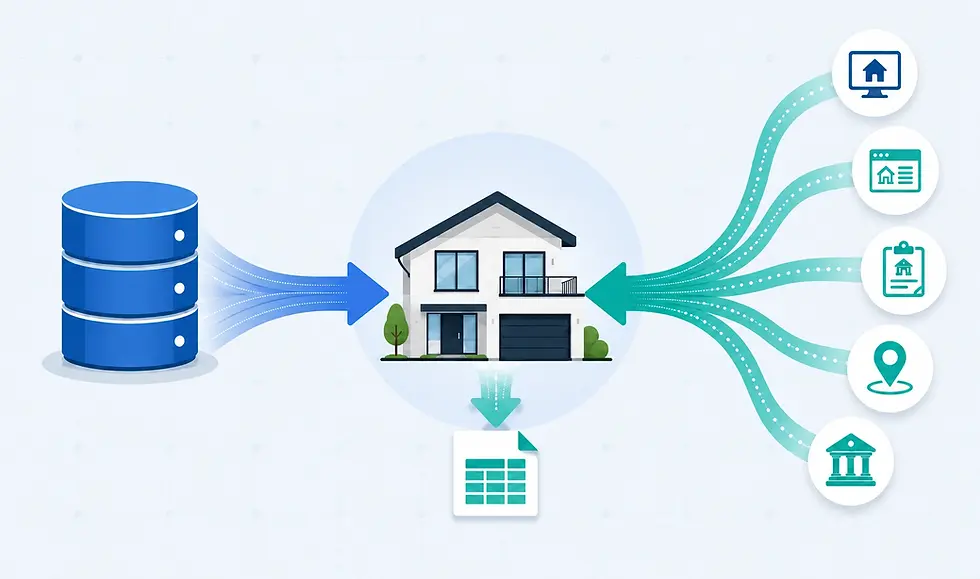
The providers above sell packaged datasets, which is efficient when your question matches what they already measure. The gap appears when it does not. A pricing team might need rates from a specific set of regional booking sites, amenity-level detail the standard reports skip, review text for sentiment analysis, or all three combined into one feed in a defined schema.
That is the work we do at Ficstar. Rather than selling a fixed report, we build a custom web data collection solution to your exact specification, collecting room rates, availability, amenities, and reviews from the booking platforms and hotel sites you name. Hotel and travel rate collection is one of the project types we have run, and we process over 1 billion product prices monthly across all client work, so the scale and the change-handling are already proven.

Two differences matter most for hospitality teams choosing this route:
You define the sources and fields. If you need rates from twelve specific sites and a competitor-pricing view that updates each morning, that is what we build. Competitor price monitoring for rates works the same way it does for retail, applied to room nights.
We handle the maintenance. Booking sites change layouts and add anti-scraping measures constantly. We monitor for those changes and update collection proactively, so the data keeps arriving without your team managing it.
The tradeoff is that custom collection is built for ongoing, large-scale needs rather than a one-time lookup. For a quick market check, a subscription tool is the faster answer. For a proprietary dataset you will rely on for pricing decisions, a fully managed approach removes the engineering burden entirely.
How to Choose the Right Hospitality Data Provider
Match the provider to the decision, not the other way around. A short version of the logic:
Benchmark your performance against the market: STR by CoStar.
Set prices with live rate and demand data, including rentals: Lighthouse.
Manage distribution pricing and demand marketing at scale: RateGain and Sojern.
Forecast occupancy from forward booking pace: Amadeus.
Underwrite a short-term rental market: AirDNA, or Key Data for managed portfolios.
Build a proprietary dataset from specific sources or fields: a custom collection partner such as Ficstar.
Many teams use more than one. A common pattern is STR for benchmarking, a rate-intelligence tool for daily pricing, and a custom feed for the sources or fields the packaged tools miss.
Frequently Asked Questions
What metrics do hotel data providers track?
Most hotel data providers track occupancy, average daily rate (ADR), and revenue per available room (RevPAR). Rate-intelligence platforms add live competitor rates and demand signals, while short-term rental providers report listing supply and rental-specific revenue.
What is the difference between STR data and rate-shopping data?
STR data is historical performance benchmarking submitted by hotels, useful for measuring how you performed against your competitive set. Rate-shopping data captures competitors' current advertised prices, useful for setting tomorrow's rates. They answer different questions, which is why many teams use both.
How much does hotel data collection cost?
It depends on the model. Subscription analytics tools are priced per property or market, while custom web data collection is priced by the number of sources, fields, volume, and update frequency. Our guide to web scraping costs breaks down the factors that drive pricing for managed data projects.
Can hotel rate and review data be collected from booking sites directly?
Yes. Public room rates, availability, amenities, and reviews can be collected directly from booking platforms and hotel websites. This is the approach to take when you need specific sources or fields that packaged providers do not offer, and it is the type of project we cover in our work on web scraping for the hospitality industry.
The Bottom Line on Hospitality Data Providers in 2026
The hotel industry runs on data, and 2025 made that clearer than ever. The American Hotel & Lodging Association (AHLA) reported that hotels operated in a constrained environment of cost inflation and uneven recovery, with profitability lagging in many markets. When margins are tight, the quality of your pricing and forecasting data directly affects the bottom line.
The right provider depends on the decision in front of you. STR sets the standard for benchmarking, Lighthouse and Amadeus lead on rate and demand intelligence, and AirDNA and Key Data cover the short-term rental market. When your need falls outside what those tools package, custom collection fills the gap.
If you need a proprietary dataset built from specific booking sites, with the rates, availability, and review fields your team actually uses, start your free trial and see the data firsthand before committing.


Comments