
How Enterprise Product Matching Actually Works

From Product Description to Competitor Intelligence
Tracking competitor prices sounds simple. But in practice, most companies struggle before they even begin. Product catalogs are rarely clean, SKU lists are incomplete, and competitor product URLs are often unknown.
The same product can appear under different names, pack sizes, or descriptions across retailers.

This is why enterprise product matching exists. Instead of relying on perfectly structured product data, modern systems can start with something as simple as a product description and gradually build a structured product universe.
Let’s understand how this process works to find out why product matching is more complex than it appears.
The Reality of Product Data in Most Companies
Many businesses assume competitor price tracking begins with a clean product catalog. In reality, the starting point is rarely that organized. Product data inside most companies is spread across multiple systems and legacy databases.
This issue is more common than many teams expect. According to research, 95% of organizations say poor data quality affects their business operations.
Internal Product Catalogs Are Often Inconsistent
Internal product catalogs rarely start as a single structured system. Over time, they grow through supplier integrations, internal updates, and product imports from different sources. Each source may use its own naming conventions, formatting rules, and attribute structures.
Pack sizes might appear as “12 Pack,” “12pk,” or “12 x 1” depending on the source. Important attributes such as variant, packaging type, or size may also be missing.
Competitor Product URLs Are Rarely Available
Internal catalogs usually contain product names and SKUs, but they rarely include direct links to competitor listings. This means teams must manually search retailer websites to locate matching products before any price comparison can begin.
This helps build trust, making 87% of customers more likely to buy from you even if you are charging more for your products.
Why Product Matching Is More Complex Than It Appears
If two retailers sell the same product, comparing the listings should be straightforward. The process becomes much more complicated once you examine how products are actually listed online.
The same product can appear in several different formats across stores. Humans can recognize these similarities quickly. However, software must analyze thousands or millions of listings at scale.
1. Inconsistent Product Naming

One of the biggest obstacles in product matching comes from how retailers name their products. Product titles are rarely standardized across platforms. Each retailer formats listings differently, depending on catalog structure, SEO strategy, and other requirements.
For example, one retailer might list a product as “Sony WH-1000XM5 Wireless Noise Cancelling Headphones.”
Another retailer may shorten the title to “Sony XM5 Wireless Headphones.” The product itself is identical, but the titles look very different.
2. Pack Size and Bundle Variations
Pack size differences create another major source of confusion. The same product can appear as a single item, a multipack, or part of a promotional bundle. Retailers also use different ways to describe quantities, which adds another layer of inconsistency.
A beverage product, for example, might appear under several descriptions, such as:
“12 Pack”
“12pk”
“12 x 330ml”
“Case of 12”
Each format refers to the same pack size, yet the wording and structure are different. Systems that rely on direct text comparison may treat these as unrelated listings.

3. Variations of a Single Product
Variants introduce another level of complexity in product matching. Many products exist in several versions that share the same base model but differ in attributes such as color, flavor, size, or configuration.

A product like running shoes provides a clear example. The same model may be available in multiple sizes and color options.
These differences in presentation make it harder to determine whether two listings represent the exact same item.
Core Signals Used in Enterprise Product Matching
Once the challenges of product matching become clear, the next question is how enterprise systems actually solve the problem. Here are the core signals used in enterprise product matching across different listings:
1. Manufacturer
Manufacturer or brand information is one of the most reliable starting points in product matching. Most retailers include the brand name in product listings because it helps customers recognize the product and improve search visibility.
When a matching system identifies the manufacturer, it immediately reduces the number of possible matches. For instance, if a product is identified as a Sony product, the system can ignore listings from unrelated brands.
2. SKU
The SKU or Stock Keeping Unit is often the strongest identifier when it is available. SKUs are internal codes used by companies to track products in inventory systems. When a retailer publishes the same SKU as a manufacturer, matching becomes much easier.
However, SKUs are not always visible in online listings. Many retailers hide them from product pages, replace them with internal identifiers, or modify the formatting to fit their own systems. This means the same product may appear with a slightly different SKU.
3. Product Name
Product titles are one of the most visible parts of a listing and contain a large amount of useful information. Titles usually include the brand, product type, model name, and key attributes. Because of this, they are an important signal in product matching.
But the problem is, product names are rarely consistent across retailers. Titles may include different abbreviations, reordered words, or additional keywords. Retailers often modify titles to improve search rankings.
4. Pack Size
Pack size is another important signal because it determines how the product is sold. Many products are available in several packaging formats. A beverage might be sold as a single bottle, a six-pack, or a twelve-pack.
Each of these options represents a different listing even though the product itself is similar. Pack size information often appears in multiple formats, making direct comparison difficult. Retailers may describe the same quantity using different wording.
5. Product Variants
Variants represent different versions of the same base product. These differences may involve attributes such as color, flavor, size, or model configuration. Although the products are closely related, they should usually be treated as separate items in product matching.
Matching systems must therefore identify variant attributes and treat them carefully. The goal is to connect identical products across retailers while avoiding incorrect grouping of different variants.
How Ficstar Builds Competitor Product Intelligence
Competitor price tracking cannot begin right away. Teams first need to identify where the same products appear across competitors' websites and marketplaces. Ficstar solves this problem by building the product structure step by step.
1. Start with a Simple Product Description
The process often begins with very basic product information. Many companies only have a product name, brief description or internal catalog entry. Even this limited information can contain useful signals.
Ficstar analyzes these signals to identify the product's core attributes. Once these are extracted, the system can begin searching for similar listings across retailer websites and marketplaces.
Starting with a simple description makes it possible to begin competitor analysis even when the internal product catalog is not perfectly structured.
2. Discover Competitor Product URLs
After identifying the product signals, the next step is locating where the same product appears across competitor websites.
Most companies do not maintain a list of competitor product URLs. As a result, pricing teams often spend a lot of time manually searching listings in different stores.
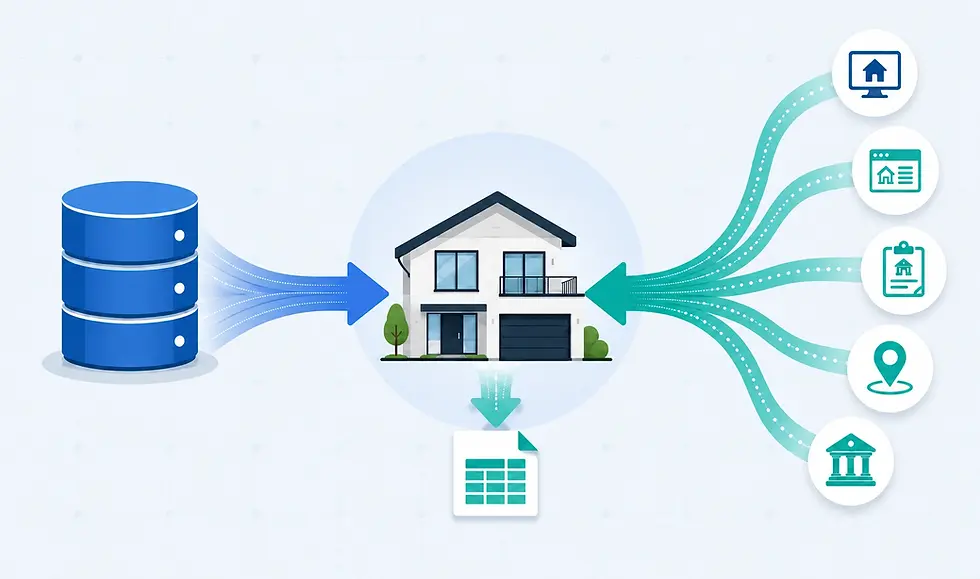
Using Ficstar, you can automate this discovery process. Utilizing its web scraping infrastructure and product matching logic, the system scans retailer websites and marketplaces to identify listings that match the product attributes.
This process builds a list of competitor product pages where the same item appears.
3. Build a Complete SKU Universe
As more product listings are discovered, Ficstar connects them into a structured product dataset. Even though the listings may look different across retailers, they often represent the same underlying product.
By analyzing signals such as manufacturer or product name, Ficstar links together these listings and creates a unified product identity.
Over time, this process creates what can be described as a SKU universe. Each product is connected to its corresponding listings across multiple retailers. This structure allows companies to understand exactly where their products appear in the market.
4. Normalize and Structure Product Data
Even after products are matched across retailers, the data itself still needs to be standardized. Retailers format product titles, attributes, and measurements differently. Without normalization, comparing listings can still produce inconsistent results.
Ficstar cleans and structures this competitor price data so it can be used reliably for analysis. Product titles are standardized, pack sizes are converted into consistent formats, and variant attributes are clearly defined.
With this, companies can confidently monitor competitor prices and analyze how their products are positioned in the market.
Turn Messy Product Data Into Competitor Intelligence
Many companies want to monitor competitor pricing, but the process often stalls before it truly begins. Without solving the issues we discussed, even the most advanced pricing analysis tools cannot produce reliable insights.
This is why product matching and product discovery matter so much. So if your team is struggling to connect products across competitors' websites, Ficstar can help you.
We can start with simple product descriptions and gradually build a reliable SKU universe across competitors.
Contact us today to transform data into competitive intelligence.


Comments